
Biology Projects
Mosquito Survey Project

I assisted Dr. Stapleton with the mosquito survey project over the summer of 2012.I Investigated mosquito sightings, and determined causes of infestations, and collected samples of eggs and larva to take back to the lab to grow in chambers, so that we could identify them. We also put mosquito traps in various locations around Little Rock and collected the mosquitoes and determined genus and species. We mapped out the locations of where each genus and species were found and analyzed the data. We also took measurements such as wind speed and direction, ambient temperature and notated general weather data for that day. This information along with general observation of the area assisted in locating the infestation areas.
.jpg)
Lepidoptera Survey of the Ouachita National Forest and Vicinity
I assisted with on-going studies that focused on moths occurring along the Buffalo National River and moth species found throughout the Ouachita National Forest and vicinity. Both projects are under the direction of Dr. Baltosser and each involves intensive, multi-year inventories spanning at least three years of data collection at some sites and over ten years of data collection from other areas. Species identification, seasonal occurrence, habitat affinities, and land management factors all combine to produce a variety of data sets. These data will be the basis for developing conservation-based decisions in regard to the future management of a number of diverse habitats. The knowledge gained from these studies forms the primary basis for assessing short-term (e.g., logging) and long-term (e.g., change in global climate) alterations of habitats managed by the US National Park Service and those under the authority of the US Forest Service. The relevance of these investigations is extensive, e.g., moths are an important food source for many species of birds and are a key component of the diet of many species of bats. For my part, I helped to organize and enter for analysis many of the data sets and I assisted in the placement of thousands of specimens into our museum.

Water survey of Algal Blooms in 7 Lakes in Central Arkansas
I assisted in trying to identify abiotic factors associated with harmful algal bloom events. I have sampled 6 water sources and collected data over a time series and analyzed this data. I learned how to use a Multi-probe system to measure the physical parameters such as pH, temperature, and others. This was a collaborative effort between Lilly Treas, Grace Rutter and myself. I helped Lilly Treas with her thesis on the drawdown at Hurricane Lake, which is when water is removed in order to control overgrowth of aquatic plants. Grace used some of my samples to complete her SURF project "Double labeling of oligonucleotide probes fluorescent in situ hybridization” (DOPE-FISH), which allows identification of different species of bacteria associated with cyanobacteria that may not be identified by conventional methods.

Diversity in a Foundation of Riparian Tree (Populus angustifolia )
I assisted with this project by collecting leaf material from several Populus trees in riparian areas. Then ran over 120 DNA extractions on them for Dr. Scott Woolbright my mentor. After he analyzed the data he suggested that we conserve and provide restoration management to the riparian ecosystem or there will be a loss in biodiversity. This study looked at connectivity between biotic and abiotic factors and genetic connectivity. He found that connectifivity correlated with genetic diversity demonstrating the need for modeling in terms of resistance. A link to this article can be found below.
The Vitellogenesis Project

This study aims to examine if differences in the extent of fat allocation to developing follicles explains observed variation in offspring size among four populations of watersnakes with access to different sized prey. Sohxlet extraction was ran to extract the fat from the reproductive tissues of the organism of interest. We determined differences in the extent of fat storage and mobilization using an analysis of covariance (ANCOVA) with female body mass as a covariate. This study provides a potential physiology mechanism that links environmental variation of prey size with differences in reproduction in capitalist-breeding predators. This manuscript is currently in progress to be submitted to the journal of Zoology.

Observation of the Effects of Different Variables on Microbial Growth Using Winogradsky Columns
This study aims to examine how different variables will affect the microbial community in a #Winogradsy column. For example, we used treatments such as baking soda to raise the pH, citric acid to lower the pH, trace metals, and other variables to see how they would change the community. The manuscript for this project is in progress. For this project we plan on creating a TIEE report for other individuals to utilize. I also assisted undergraduate Yanping Izak Harville with setting up Winogradsky columns for his project to examine how differing levels of acetaminophen can affect microbial growth.

Observation of the Effects of Different Variables on Diatom Growth Using Petri Dishes
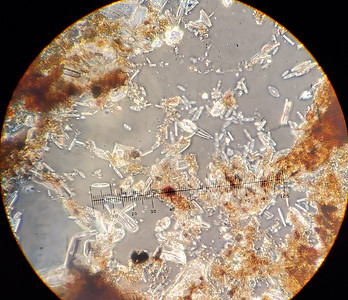
This study aims to examine how different variables will affect the diatom community growth in petri dishes with soil. For example, we used treatments such as baking soda to raise the pH, citric acid to lower the pH, trace metals, and other variables to see how they would change the community. For this project we plan on creating a TIEE report for other individuals to utilize. This study is done to assist in practice for diatom identification as weel as set the stage for the land use changes project.
How Land Use Changes Effect the Microbial Community
This project will aid in determining the effects of land use change the biodiversity of a land type such as prairie land. For this project I collected soil cores from three different prairie sites in Siloam Springs in Arkansas. DNA community analysis will be examined along with soil diatom relative abundance and diversity. Diatom communities have previously been shown to be useful indicators of land-use change on the local environment. use soil diatoms to look for predictable differences in community composition across a range of disturbance types. From completely undisturbed prairie land to land that has been completely changed into agricultural land.